Finding the right roofer in King’s Lynn is not only about comparing quotes. It is about matching the roof on your home or business to the skills, systems, and judgement of a contractor who knows the town’s housing stock and local weather. I have seen sound materials fail because of rushed detailing, and modest budgets deliver outstanding roofs because the basics were done well. This guide gathers practical, field-tested criteria to help you choose with confidence, whether you manage a Victorian terrace near the Walks, a bungalow in North Lynn, or a commercial unit on Hardwick.
What makes roofing in King’s Lynn distinct
The town sits a short drive from the Wash, which means weather that changes direction and mood more often than forecasts suggest. We see salt-laden winds, sharp winter frosts, and sideways rain that finds weaknesses in flashing and ridge lines. Combined with a mix of heritage clay tile roofs, concrete interlocks from the 1960s to 1980s, and modern EPDM or torch-on felt on flat sections, it creates a demanding environment.
Older terraces often have shallow-pitched roofs and mixed substrates, where original lath and plaster met later plywood repairs. Dormers with felt or single-ply membranes intersect tiled slopes, and parapet walls add another water path when joints are not sealed correctly. Many of the failures I inspect start where materials meet: tile to lead, felt to masonry, ridge to hip. A good roofer kings lynn will not just lay new coverings, they will chase the details.
Local knowledge pays for itself
The best King’s Lynn Roofers develop a library of mental notes, address by address. They know which estates have brittle early concrete tiles that crumble underfoot, which corners catch the wind, and which conservation streets require traditional materials. A seasoned contractor can look at a gable and predict whether the original mortar-bedded ridge will cope with the next gale or if a dry ridge system makes sense.
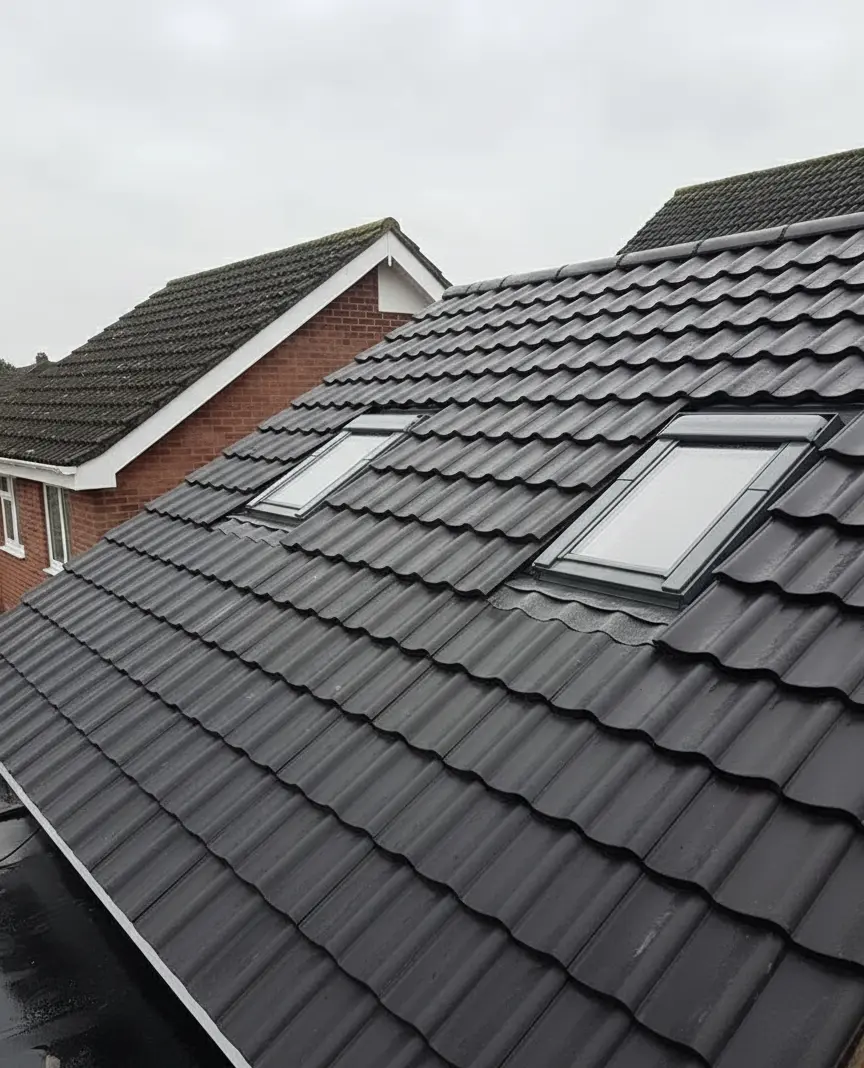
Ask specifically about local projects. If someone has replaced a roof a few streets away, they can show how they handled similar chimneys, the same guttering depth, and how they ensured ventilation in a roof void that lacks eaves soffits. Local experience matters as much as formal credentials.
The three truths that decide roof longevity
I was taught to judge any roof by materials, workmanship, and detailing. Over time, I added a fourth, ventilation, because of the condensation problems that appear in insulated lofts.
Materials are not all equal, even within a brand line. The wrong tile profile or underlay can cause wind uplift or trapped moisture. Workmanship means how well each course lines up, how cuts are made, and whether fixings follow the manufacturer’s pattern. Detailing covers the places where water tries to sneak in, like abutments and valleys. Ventilation ensures the roof can dry out, which protects timber and reduces mould.
If any one weak link exists, the roof fails early. Most leak callouts I see within five years of a replacement are not because tiles broke. The culprit is almost always a short length of flashing, a valley with a tight turn, or a soffit blocked by insulation.
Roofing materials you will actually see in town
On pitched roofs, clay and concrete tiles dominate. Historic cores often use clay plain tiles, which weather gracefully and last a long time if fixed well. They are heavier and need proper batten spacing and fixings, particularly on windy corners. Concrete interlocks are common on post-war estates. They are quicker to lay, cost less per square metre, and, when secured to spec, perform well in rough weather.
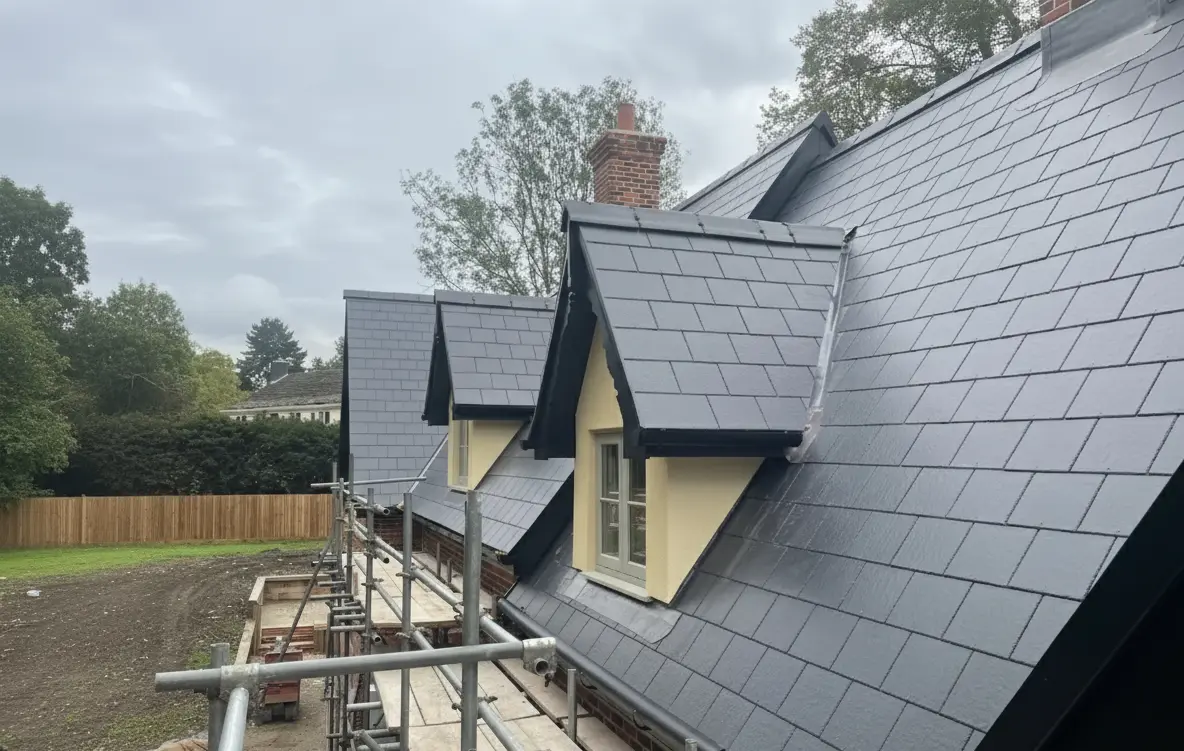
Natural or fibre-cement slates appear in pockets. Natural slate looks superb and can last many decades if the substrate is sound and nails are non-ferrous. Fibre-cement slates are lighter and consistent, with more modest lifespans. On flat roofs, EPDM, GRP, and torch-on felt compete. EPDM is forgiving if laid on clean, dry decks and properly edged. GRP creates crisp edges but demands the right temperature window for lamination. Torch-on felt is robust in experienced hands and remains a good option for garages and extensions, provided the substrate is dry and falls are adequate.
A roofer kings lynn with broad product familiarity can explain why a membrane or tile profile suits your roof rather than pitching their favourite on autopilot.
The art and risk of roof repairs
Not every failing roof needs replacement. Repairs are economical when the structure is sound and the problem is localised. A slipped tile, mortar cracks at a ridge, or a short length of split flashing can be set right quickly. The risk lies in chasing leaks without access or time to test. Water travels along rafters and battens, then shows up rooms away from the point of entry. I have removed whole valleys to find one nail hole in a liner that only leaked during wind-driven rain from the north.
Good repair work relies on method. Photograph the area before, remove layers carefully, and recreate the drips, laps, and fixings to the original standard or better. A contractor who jumps to tar and mastic over joints might stop a drip for a season, then leave you with a bigger problem later. Ask how they diagnose leaks and whether they include a water test. The answer will tell you a lot about their standards.
Credentials that matter, and those that don’t
Insurance is non-negotiable. Public liability should be visible on the quote with the insurer’s name and cover level. For work that affects structure, an appropriate tradesman’s liability is sensible. For flat roofs and certain systems, manufacturer approval brings extended warranties, but I look for proof beyond a logo. Ask to see the membership number and a recent job registered with the manufacturer.
Trade bodies can be useful if they enforce standards. CompetentRoofer allowed self-certification for certain refurbishments, though schemes evolve, so ask how your contractor will meet building regulations. For pitched roofs that alter the insulation or ventilation, or if you change more than a quarter of the covering, building control may need notification. A trustworthy contractor will handle this or guide you on fees and process.
Quotes that help you decide, not confuse you
A clear quote breaks down the roof into components. I want to see lengths of ridge and hip, valley type, flashing materials and thickness, underlay type and weight, batten grade, tile or slate make and model, ventilation approach, and whether scaffolding, waste removal, and Building Control fees are included. Vague lines like “fix roof tiles and make good” do not protect you.
Where budgets are tight, consider alternative specs. For example, swapping a natural slate to a good fibre-cement slate with stainless fixings can save thousands while still providing a clean, long-lasting roof. On flat roofs, upgrading from a basic torch-on to a thicker cap sheet might add a few hundred pounds and ten extra years, a sensible trade if you plan to stay.
The site set-up is part of the job
Scaffolding on King’s Lynn streets often requires care, due to parking, narrow pavements, and shop fronts. The roofer should coordinate permits when required, specify scaffold design for chimney access, and use netting where debris risk exists. Edge protection saves accidents. I pay attention to how a contractor stores tiles overnight, where they place skips, and whether they protect driveways and gardens. A tidy site is more than pride. It stops punctures from nails and keeps your neighbours on side.
Ventilation, insulation, and the moisture trap
Insulation standards rose, and many loft spaces now hold thick rolls of mineral wool or foil-backed boards. Without planned airflow, that warm, moist air meets cold tile underlay and condenses. Over a winter or two, timbers darken and mould grows. You need a continuous path for air from eaves to ridge, or a sealed warm roof build-up on flat sections. Eaves ventilation can be tricky when older houses have minimal soffits. In that case, slate vents, ridge vents, or over-fascia vents create the path. A knowledgeable contractor will calculate equivalent airflow and avoid short-circuiting the system.
On flat roofs, a warm roof build-up places insulation above the deck, preventing cold spots. I have seen too many cold roofs with token mushroom vents that never kept pace with moisture. If a flat roof sits over a kitchen or bathroom, lean toward a warm roof and mechanical extraction.
Lead, flashings, and the parts that save a roof
Lead remains the gold standard for abutments and chimneys, provided the thickness suits the span. Code 4 for typical flashings, code 5 where the run is wider, with proper laps and step joints. Done right, lead lasts decades. Alternatives exist, including flexible polymers that work well on lighter structures or where theft risk is high. A roofer should not be dogmatic here. I have used lead-look products successfully on garden offices where weight and budget mattered, but I still prefer lead around chimneys on period houses.
Chimney stacks deserve a full inspection. Many leaks blamed on roofs start with open mortar joints, defective flaunching, or porous brickwork. Repointing and a breathable water repellent sometimes solve the problem better than re-roofing a whole slope. If a stack is dead, consider removing it below roof level, with the right structural checks and permissions.
Timing and weather windows
Roofing is sensitive to weather, particularly GRP and torch-on systems that need dry decks and stable temperatures. King’s Lynn can serve a week of calm followed by gales off the Wash. A reliable contractor builds contingency into scheduling and secures temporary coverings that really hold in wind. Be wary of anyone who promises a full tear-off and replacement in two days across the depth of winter without a plan B. When rain approaches, stopping in a safe state is a skill. I have seen tarps save a job and I have seen them fail because they were not tied to sound points or properly weighted.
Price signals you can trust
Pricing varies with material choice, access, roof complexity, and disposal costs. A steep, cut-up roof with dormers and valleys simply takes longer than a clean rectangle. In my experience, for a typical semi in King’s Lynn with a simple gable, a full re-roof with concrete tiles, breathable underlay, treated battens, dry ridge, and new gutters can sit in the mid four figures to low five figures depending on access and specification. Natural slate pushes higher. Flat roofs range widely by area and insulation build-up.
The cheapest quote is often missing something. The most expensive is not always the best either. Focus on scope and detail, then check whether the contractor stuck to similar scopes on nearby jobs.
How to vet a contractor without wasting weeks
Use two brief phone calls and one site meeting to gather what you need. Start by asking if the contractor has completed similar roofs locally, whether they handle building control notifications, and if they can provide addresses you can view from the street. In the meeting, watch what they look at. Someone who measures ridge lengths, checks soffit ventilation, lifts a few tiles to see batten condition, and peers into the loft is taking the roof seriously. If all they do is circle the house and fire off a number, that is a warning sign.
Ask how they handle unexpected rot or hidden defects. Good firms specify a day rate or a unit price for timber replacement, with photos King's Lynn Roofers before and after. Agree in writing that variations require your approval.
Warranty reality, not wishful thinking
Two warranties apply. Workmanship coverage from the contractor, and material warranties from manufacturers. The workmanship warranty matters more in the early years. I prefer five years as a baseline. For materials, read the fine print. Some underlays carry long theoretical lifespans that assume perfect ventilation and fixings. A reputable roofer kings lynn will give you a small pack on completion: material invoices, batch codes for membranes and adhesives, and a diagram of vent positions. If anything fails, those details make claims smoother.
Insurance-backed guarantees exist. They add security if a firm stops trading, though they come with terms and sometimes inspection fees. Decide whether the premium is worthwhile for your peace of mind.
The human factor on a live job
Communication sets the tone. At the start, agree on the sequence: scaffold up, delivery, strip, inspect, repair substrate, install underlay and battens, lay covering, install flashings and ridges, clear site. Daily updates can be as simple as a text in the afternoon. If the crew finds a rotten valley board, you want to know that day, not at the invoice stage.
Respect for your property is also a measure. Roofers should protect glazing, conservatories, and landscaping. I keep plywood sheets for fragile roofs and insist on debris chutes when stripping above driveways. At the end, the magnet sweep for nails is not a courtesy, it is a necessity if children or pets use the garden.
When a roof replacement is unavoidable
Patches can extend life, but there is a point where money spent on repairs would be better invested in a thorough replacement. Symptoms include widespread underlay failure evident from the loft, multiple slipped tiles after moderate winds, ridge mortar breaking along most of its length, and valleys that have been patched repeatedly. If you can push a finger through felt from the loft in a dozen locations, the roof covering has passed its service life. Re-roofing lets you fix structural issues, straighten lines, and bring ventilation up to standard. It also resets the clock, which matters if you plan to sell in the next few years.
Conservation and appearance
Parts of King’s Lynn fall within conservation areas where material appearance matters. Check the designation early. A contractor familiar with the planning team can advise whether a clay plain tile is required or if a high-quality concrete alternative will pass. Even where planning does not strictly limit your options, matching existing colours and textures keeps a street coherent and can affect resale value. On terraces, changing to a bold, modern profile may draw the wrong kind of attention in a row of mellow clay roofs.
Flat roofs over living spaces
Extensions and dormers often hide the toughest details. A flat roof over a bedroom needs insulation thickness that meets current U-value targets, proper vapour control, and careful edge trims. Warm roofs reduce condensation risk, but the build-up adds height that must be managed at door thresholds and parapets. Double-check gutter falls and outlets. I prefer oversized outlets with leaf guards, and a secondary overflow that shows if a blockage occurs. Standing water shortens a roof’s life, regardless of the membrane brand.
Safety, access, and neighbours
A considerate contractor does more than erect scaffold. They knock on neighbours’ doors, agree on parking plans for deliveries, and set working hours that respect the street. Noise and dust are part of roofing, but water down and sweep at the end of the day and the street forgives quickly. On tight terraced lanes, I schedule deliveries early, before traffic builds, and I stack tiles on scaffold lifts to avoid blocking the pavement.
Realistic timelines
For a straightforward semi-detached pitched re-roof with good access, expect roughly one to two weeks, including scaffold. Add days for chimneys, valleys, and weather delays. Flat roofs vary by drying times and resin cure windows. Build a buffer into your own schedule. If you plan interior decorating, leave space after the roof is complete in case any small adjustments are needed.
What separates excellent from adequate
Two roofs can look tidy on the final day and diverge sharply over time. The difference shows at edges, penetrations, and in the roof’s ability to breathe. An excellent job features straight courses that align around roof windows, ridge and hip systems fixed to spec, lead dressed without splits, and gutters set to the right fall with joints that are clean and dry. Inside the loft, you will find insulation laid without choking eaves, vents placed where needed, and no daylight showing where it should not.
I often ask to see a roofer’s least favourite job, not their best. If they can explain what went wrong on a difficult winter job and how they put it right, you have someone who learns and stands by the work.
A short, practical checklist before you sign
- Ask for three local addresses completed in the last 12 months, ideally with similar roof types, and view them from the street. Request a written scope that lists materials by brand and model, ventilation method, flashing materials, and waste disposal. Confirm insurance details and how building control will be handled if required. Agree on variation pricing for hidden defects with a photo-before-photo-after policy. Establish communication: daily brief update, start time, site protection measures, and a target completion window with weather contingency.
Aftercare and seasonal maintenance
Even the best roof benefits from light upkeep. Clear gutters in late autumn, after most leaves drop. Check valleys and outlets for grit and debris. After heavy storms, a quick look from the ground for slipped tiles or displaced ridge caps can save a leak. If you have moss, do not pressure wash a tile roof. That strips surface finish and can drive water under tiles. A professional soft-wash or preventive measures like zinc strips near the ridge can help, though results vary. Document small issues with photos and share them with your roofer before they grow into larger repairs.
When to call an expert quickly
If you see damp spreading at an internal ceiling below a valley or chimney, act. Staining near an external wall often signals flashing trouble. In winter, frost on rafters inside the loft that lingers after a sunny morning hints at poor ventilation. Leave that for a season and timber can suffer. A prompt visit from a competent contractor often resolves these issues with minimal disruption.
Final thoughts for homeowners and landlords
A roof is rarely the place to chase the lowest price or the trendiest pitch. Choose a roofer kings lynn who respects the climate, the materials, and the way water behaves on your specific structure. Demand clarity on the design details: ventilation, flashings, and edges. Insist on clean, safe access and a tidy site. If you strike that balance, you usually get a roof that earns its keep for decades, keeps insurers content, and lets the rest of your home improvements shine without fear of drips, drafts, or damp.
King’s Lynn Roofers with genuine local track records will share references readily, explain choices without jargon, and welcome your questions. Once you find that kind of contractor, keep the relationship. Future minor fixes, gutter issues, or the odd slipped tile get handled faster, and your home stays warm, dry, and straightforward to maintain.